
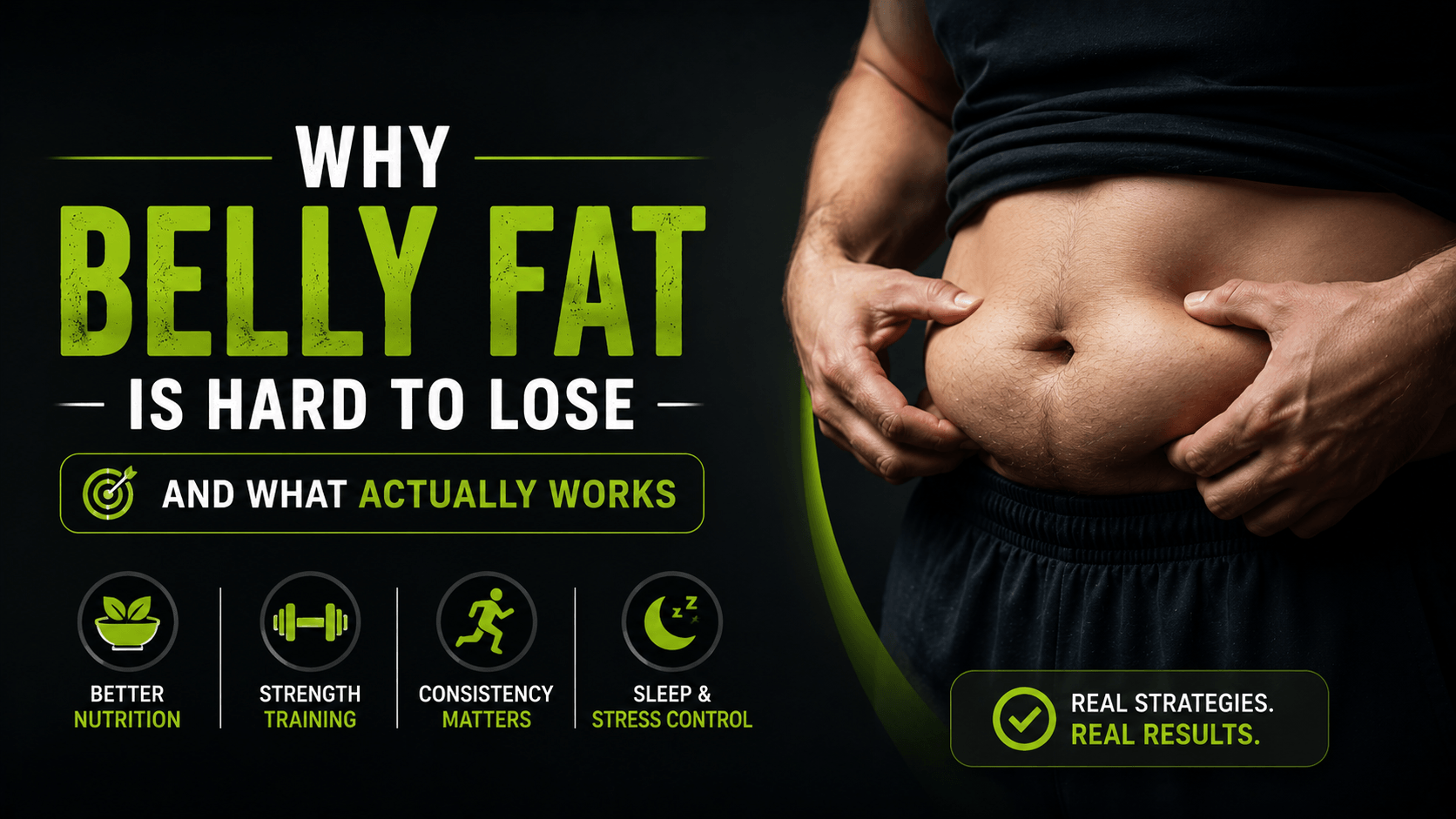
What Makes Belly Fat So Stubborn and the Best Strategies to Burn It
You've cut down on rice. You've started walking every evening. Maybe you've even given up sugar in your chai. And yet, the belly fat just sits there, stubborn as ever, while you've noticed your face looking thinner and your arms a bit more toned.
If this sounds familiar, you're not doing anything wrong. Belly fat genuinely is harder to lose than fat anywhere else on the body. There's real biology behind why, and once you understand it, the frustration makes a lot more sense and so does the actual solution.
This guide breaks down why belly fat is so stubborn, what's really driving it, and which strategies are backed by science rather than Instagram trends.
Why Belly Fat Is Different From Other Body Fat
Not all fat behaves the same way. Understanding this difference is the first step to actually losing it.
Subcutaneous Fat vs Visceral Fat
The fat just under your skin the kind you can pinch on your arms or thighs is called subcutaneous fat. It's metabolically relatively passive and responds fairly predictably to calorie deficits and exercise.
Belly fat is different. A significant portion of abdominal fat is visceral fat, which wraps around your internal organs — liver, intestines, pancreas. Visceral fat is not just stored energy. It's biologically active tissue that releases inflammatory compounds and hormones directly into your bloodstream.
This is why belly fat doesn't just look different. It behaves differently, and it's also linked to far greater health risk than fat stored elsewhere on the body.
Why It's the Last to Go
Evolutionarily, abdominal fat was the body's emergency energy reserve, positioned close to vital organs for quick access during famine or extreme stress. The body is biologically reluctant to release this fat easily, treating it as a priority reserve rather than the first thing to burn.
This is also why belly fat tends to be the last to disappear during weight loss, even as fat reduces elsewhere first. The body simply prioritizes other fat stores before tapping into visceral reserves.
What Causes Stubborn Belly Fat? The Real Drivers
1. Cortisol The Stress Hormone That Targets the Belly
This is one of the most underrated belly fat causes. Chronic stress keeps cortisol elevated, and cortisol has a particular relationship with abdominal fat it directly promotes fat storage in the visceral region more than anywhere else on the body.
This is partly why people under constant work pressure, juggling deadlines and poor sleep, often notice belly fat accumulating even when their overall diet hasn't changed much. The body, sensing chronic "threat" through elevated cortisol, stores fat centrally as a stress response.
Managing stress is not a soft, secondary part of belly fat reduction. It's a direct physiological lever.
2. Insulin Resistance and Blood Sugar Spikes
When you eat foods that spike blood sugar rapidly white rice, maida-based snacks, sugary beverages, processed foods — insulin rises sharply to manage the glucose load. Over time, with repeated spikes, cells can become less responsive to insulin, a condition called insulin resistance.
Insulin resistance promotes fat storage, particularly around the abdomen, and makes it significantly harder for the body to access fat for energy. This creates a frustrating cycle: insulin resistance promotes belly fat, and belly fat worsens insulin resistance.
This is one of the central reasons why belly fat is stubborn for people eating a high-refined-carb diet, even if they're not necessarily eating excess calories overall.
3. Poor Sleep
Sleep deprivation disrupts two key appetite-regulating hormones: ghrelin (which increases hunger) rises, and leptin (which signals fullness) drops. The result is increased appetite, particularly cravings for high-calorie, high-sugar foods.
Beyond appetite, poor sleep also raises cortisol compounding the stress-driven belly fat mechanism described above. Studies have found that people sleeping less than 6 hours a night are significantly more likely to carry excess visceral fat compared to those getting 7 to 8 hours, independent of total calorie intake.
This connects directly to broader patterns of daily habits that affect health. The 10 Daily Habits That Quietly Damage Your Health article covers how sleep deprivation and chronic stress compound across the body belly fat is one of the most visible consequences of these patterns.
4. Sedentary Lifestyle
Extended sitting, minimal daily movement, and a largely inactive lifestyle slow metabolic rate and reduce the body's overall calorie expenditure. Even with a reasonable diet, a sedentary routine creates a slow, steady environment for fat accumulation, particularly around the midsection.
This is not just about formal exercise. Total daily movement walking, taking stairs, standing, household activity matters significantly for metabolic health, often more than people realize.
5. Age-Related Hormonal Shifts
As people age, particularly past 35 to 40, hormonal changes naturally shift fat storage patterns toward the abdomen. In women, the decline in estrogen during perimenopause and menopause is strongly associated with increased visceral fat, even without changes in diet or activity level. In men, declining testosterone has a similar, if less dramatic, effect.
This doesn't mean belly fat becomes unavoidable with age. It means the strategies that worked at 25 may need adjustment by 40 — particularly around strength training and protein intake, both of which help counter age-related metabolic slowdown.
6. Genetics and Body Fat Distribution
Some people are simply genetically predisposed to store more fat in the abdominal region rather than the hips, thighs, or arms. This is part of why two people with the same calorie intake and activity level can have very different body fat distribution.
Genetics influence the tendency, but they don't make belly fat loss impossible. They just mean some people need to be more deliberate and consistent with the factors that are within their control.
Why Crunches and Sit-Ups Don't Work (The Spot Reduction Myth)
This needs to be said clearly because it's one of the most persistent fitness myths. You cannot spot-reduce fat by exercising the muscle underneath it.
Doing hundreds of crunches strengthens your abdominal muscles. It does not specifically burn the fat covering them. Fat loss happens systemically, based on overall calorie balance, hormonal regulation, and metabolic health not based on which muscle group you're targeting in a workout.
This is well established in exercise physiology research. A 2011 study published in the Journal of Strength and Conditioning Research had participants perform abdominal exercises for 6 weeks and found no significant reduction in abdominal fat thickness, despite measurable improvement in muscular endurance.
Core exercises are valuable for strength, posture, and metabolic benefit from muscle building. They're just not a direct belly fat reduction tool on their own.
What Actually Works for Losing Belly Fat
1. A Sustainable Calorie Deficit
This remains the foundational principle. Fat loss anywhere in the body, including the abdomen, requires consistently consuming fewer calories than you burn. Extreme deficits backfire they trigger muscle loss, metabolic slowdown, and are rarely sustainable.
A moderate deficit of 300 to 500 calories below maintenance, sustained consistently, produces steady, healthy fat loss of approximately 0.5 to 1 kg per week without the rebound effect common to crash diets.
2. Prioritize Protein at Every Meal
Protein has the highest thermic effect of any macronutrient, meaning your body burns more calories digesting it compared to fats or carbohydrates. Protein also preserves muscle mass during a calorie deficit and significantly improves satiety, reducing overall hunger and snacking.
For Indian vegetarians specifically, building a high-protein diet using dal, paneer, soya, and other accessible sources makes a measurable difference in belly fat reduction outcomes. The Top High-Protein Vegetarian Foods in India (Without Supplements) guide provides a complete breakdown of how to structure meals around adequate protein using everyday Indian ingredients.
3. Strength Training Over Cardio Alone
While cardio burns calories during the activity itself, strength training builds muscle mass, which increases resting metabolic rate over time — meaning you burn more calories even at rest. Research consistently shows that a combination of strength training and moderate cardio outperforms cardio alone for visceral fat reduction.
Two to three strength sessions a week, targeting major muscle groups, is sufficient for most people to see meaningful body composition change over 3 to 4 months.
4. Reduce Refined Carbs and Added Sugar
Given the insulin resistance connection described earlier, reducing intake of white rice, maida products, sugary beverages, and packaged snacks has a disproportionate effect on belly fat specifically, compared to general weight loss.
This doesn't mean eliminating carbohydrates. Whole grains, fruits, and fibre-rich vegetables don't trigger the same rapid insulin spikes and are an important part of a sustainable diet.
5. Manage Stress Actively
Since cortisol directly promotes abdominal fat storage, stress management is not optional for someone serious about reducing belly fat. Regular exercise, adequate sleep, meditation, and setting boundaries around work all measurably lower cortisol over time.
People who address chronic stress alongside diet and exercise consistently see better abdominal fat reduction results than those focusing on diet and exercise alone while remaining chronically stressed.
6. Fix Sleep Before Anything Else
If sleep is consistently under 6 hours, addressing this should be a priority before fine-tuning diet or workout plans. Poor sleep undermines almost every other belly fat reduction effort by increasing hunger hormones, raising cortisol, and reducing workout recovery and performance.
7. Walk More Genuinely Underrated
Daily walking, particularly after meals, has a measurable effect on blood sugar regulation and overall calorie expenditure without the recovery demands of intense exercise. A 15 to 20 minute walk after a meal can blunt the post-meal blood sugar spike significantly, reducing the insulin response that promotes fat storage.
Aiming for 8,000 to 10,000 steps a day, even without formal exercise, is one of the most sustainable and accessible interventions for belly fat reduction available to almost anyone.
Belly Fat Reduction: What Helps vs What Doesn't
|
Strategy |
Effectiveness |
Notes |
|
Calorie deficit |
High |
Foundational requirement for any fat loss |
|
Protein-rich diet |
High |
Improves satiety, preserves muscle |
|
Strength training |
High |
Builds muscle, raises resting metabolism |
|
Walking / daily movement |
High |
Underrated, sustainable, low recovery cost |
|
Stress management |
High |
Directly lowers cortisol-driven fat storage |
|
Adequate sleep |
High |
Regulates hunger hormones and cortisol |
|
Crunches / sit-ups alone |
Low |
Builds muscle, does not burn fat directly |
|
Waist trainers / belts |
Very low |
No evidence of fat loss, water weight only |
|
Detox teas / fat burner pills |
Very low to none |
Largely unregulated, limited evidence |
|
Crash dieting |
Low (long-term) |
Often leads to muscle loss and rebound weight gain |
Why Belly Fat Matters Beyond Appearance
This is worth saying directly. Belly fat reduction isn't just about how clothes fit. Visceral fat is strongly associated with increased risk of type 2 diabetes, high blood pressure, fatty liver disease, and cardiovascular disease.
Excess visceral fat releases inflammatory markers that contribute to insulin resistance and arterial inflammation both significant risk factors in the kind of early heart disease increasingly seen in younger Indians. The Why Young Indians Are Facing More Heart Attacks Than Before article explores how lifestyle-driven factors, including abdominal fat, are connected to the rising trend of cardiac events in people under 45.
Waist circumference is actually considered a more reliable indicator of cardiometabolic risk than overall BMI in many clinical contexts. A waist circumference above 90 cm for men and 80 cm for women (per WHO Asian population guidelines) is associated with significantly elevated health risk.
A Realistic Weekly Approach
Here's how the strategies above can come together practically:
-
Diet: Moderate calorie deficit, protein at every meal, minimal refined sugar and maida, fibre-rich vegetables and whole grains
-
Exercise: 2 to 3 strength training sessions, 2 to 3 moderate cardio sessions (brisk walking, cycling, swimming)
-
Daily movement: 8,000+ steps, short walks after meals
-
Sleep: 7 to 8 hours, consistent sleep and wake times
-
Stress: Daily 10 to 15 minute stress management practice (meditation, breathing exercises, or simply unplugging)
This combination, sustained over 3 to 6 months, produces meaningful and lasting belly fat reduction far more reliably than any single intervention alone.
FAQs
Q: Why is belly fat the hardest to lose?
Belly fat includes visceral fat, which is metabolically active and biologically prioritized as an emergency energy reserve. It's also strongly influenced by cortisol and insulin resistance, both of which actively promote abdominal fat storage, making it more resistant to loss than fat elsewhere on the body.
Q: Can stress really cause belly fat?
Yes. Chronic stress keeps cortisol elevated, and cortisol directly promotes fat storage specifically in the abdominal region. This is a well-documented physiological mechanism, not just correlation.
Q: Do ab exercises like crunches reduce belly fat?
No. Ab exercises strengthen the underlying muscles but don't burn the fat covering them. Fat loss is systemic and depends on overall calorie balance, diet quality, and hormonal regulation, not which muscle group you're exercising.
Q: How long does it take to lose belly fat?
With a consistent moderate calorie deficit, adequate protein, strength training, and good sleep, most people start noticing visible changes in 6 to 8 weeks, with more significant results over 3 to 6 months. Belly fat typically reduces more slowly than fat in other areas.
Q: Does walking help reduce belly fat?
Yes, significantly. Walking, especially after meals, helps regulate blood sugar and insulin response, which directly affects abdominal fat storage. It's one of the most sustainable and accessible tools for belly fat reduction.
Q: Is belly fat dangerous for health?
Yes. Visceral fat releases inflammatory compounds linked to insulin resistance, high blood pressure, fatty liver disease, and increased cardiovascular risk. It's considered more dangerous than fat stored in other parts of the body.
Q: Can poor sleep cause belly fat?
Yes. Sleep deprivation raises cortisol and disrupts hunger hormones (ghrelin and leptin), increasing appetite and promoting fat storage, particularly in the abdominal region. Getting 7 to 8 hours of quality sleep is an important part of belly fat reduction.
The Bottom Line
Belly fat is stubborn because of real biology, not because you're doing something wrong or lack willpower. Cortisol, insulin resistance, poor sleep, and a sedentary lifestyle all work together to make abdominal fat the last to go and the first to return without sustained effort.
But "stubborn" doesn't mean "impossible." A moderate calorie deficit, consistent protein intake, strength training, daily movement, good sleep, and active stress management together, consistently, over months — genuinely work. There is no shortcut, no magic tea, no waist trainer that replaces this combination.
Start with one piece. Fix your sleep. Add a short walk after dinner. Build from there.
Disclaimer: This article is for informational and educational purposes only and does not constitute medical or dietetic advice. Consult a qualified healthcare professional or registered dietitian before making significant changes to your diet or exercise routine, especially if you have any underlying health conditions.
Suggested Articles
 Ayurvedic Tips
Planet Fitness opens to teens for free throughout the summer
Read Article arrow_forward
Ayurvedic Tips
Cellular Health: 3 Anti-Aging Myths Debunked for Real Longevity
Dive deep into cellular health to uncover the truth about anti-aging. We debunk 3 pervasive myths, offering science-b...
Read Article arrow_forward Healthy Lifestyle
Prediabetes Reversed: 5 Scientifically-Backed Habits to Permanently Normalize Blood Sugar (2026 )
Learn 5 simple, sustainable habits to improve blood sugar control, support metabolic health, and take meaningful step...
Read Article arrow_forward
Ayurvedic Tips
Emma Raducanu: Wimbledon fitness concerns grow as British No 1 cuts short practice session
Concerns are mounting over Emma Raducanu's fitness for Wimbledon after the British No 1 reportedly cut short a practi...
Read Article arrow_forward